

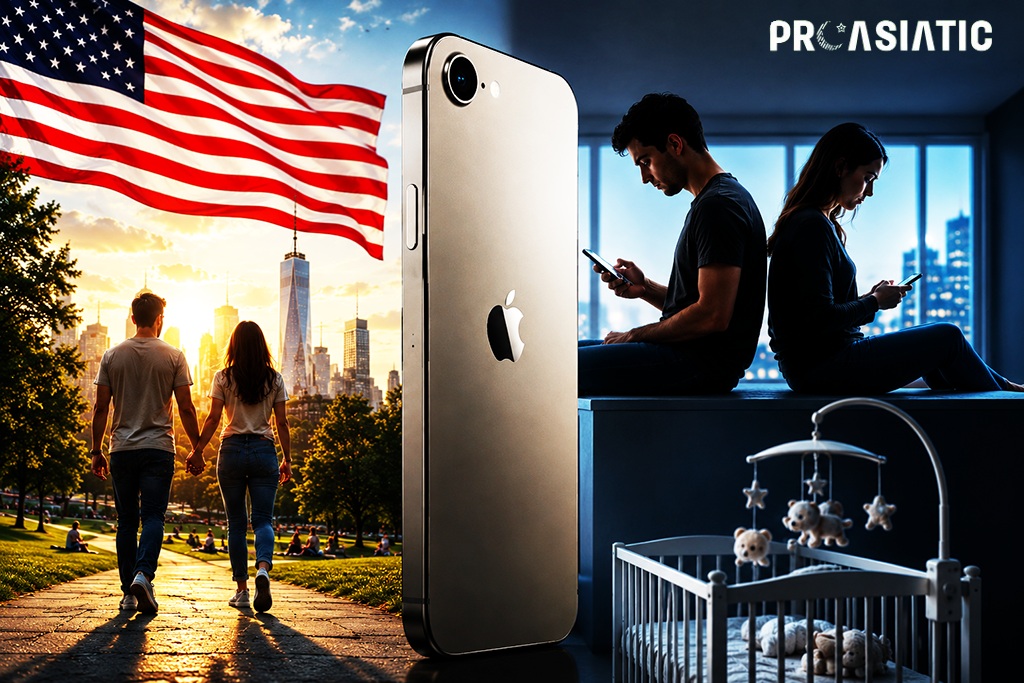
A new working paper published by the National Bureau of Economic Research (NBER) has suggested that the spread of smartphones—particularly after the launch of Apple’s iPhone in 2007—may have played a significant role in the decline of birth rates in the United States.
According to the study, the U.S. general fertility rate has fallen by approximately 22% since 2007. Researchers argue that this decline cannot be fully explained by traditional factors such as the 2008 financial crisis, housing costs, childcare expenses, or contraceptive use alone.
The research used the iPhone’s exclusive availability on AT&T’s network between 2007 and 2011 as a natural experiment. Counties with earlier access to the iPhone experienced larger declines in birth rates than areas where access came later.
The study estimates that:
- Births among women aged 15–19 declined by 4.5% to 8.0% due to early smartphone access.
- Births among women aged 20–24 declined by 3.2% to 6.6%.
- Overall, smartphone diffusion may explain 33% to 52% of the decline in U.S. fertility rates among women aged 15–44 during the study period.
Researchers suggest that smartphones have changed social behavior by reducing face-to-face interactions, increasing time spent online, and contributing to lower levels of romantic relationships and sexual activity among young adults. However, they emphasize that smartphones are one of several factors influencing fertility trends rather than the sole cause.
The findings have sparked global debate over how digital technology may be reshaping relationships, family formation, and long-term demographic patterns in the modern era.
۔


 has suggested that the spread of smartphones—particularly after the launch of Apple's iPhone in 2007—may have played a significant role in the decline of birth rates in the United States.)